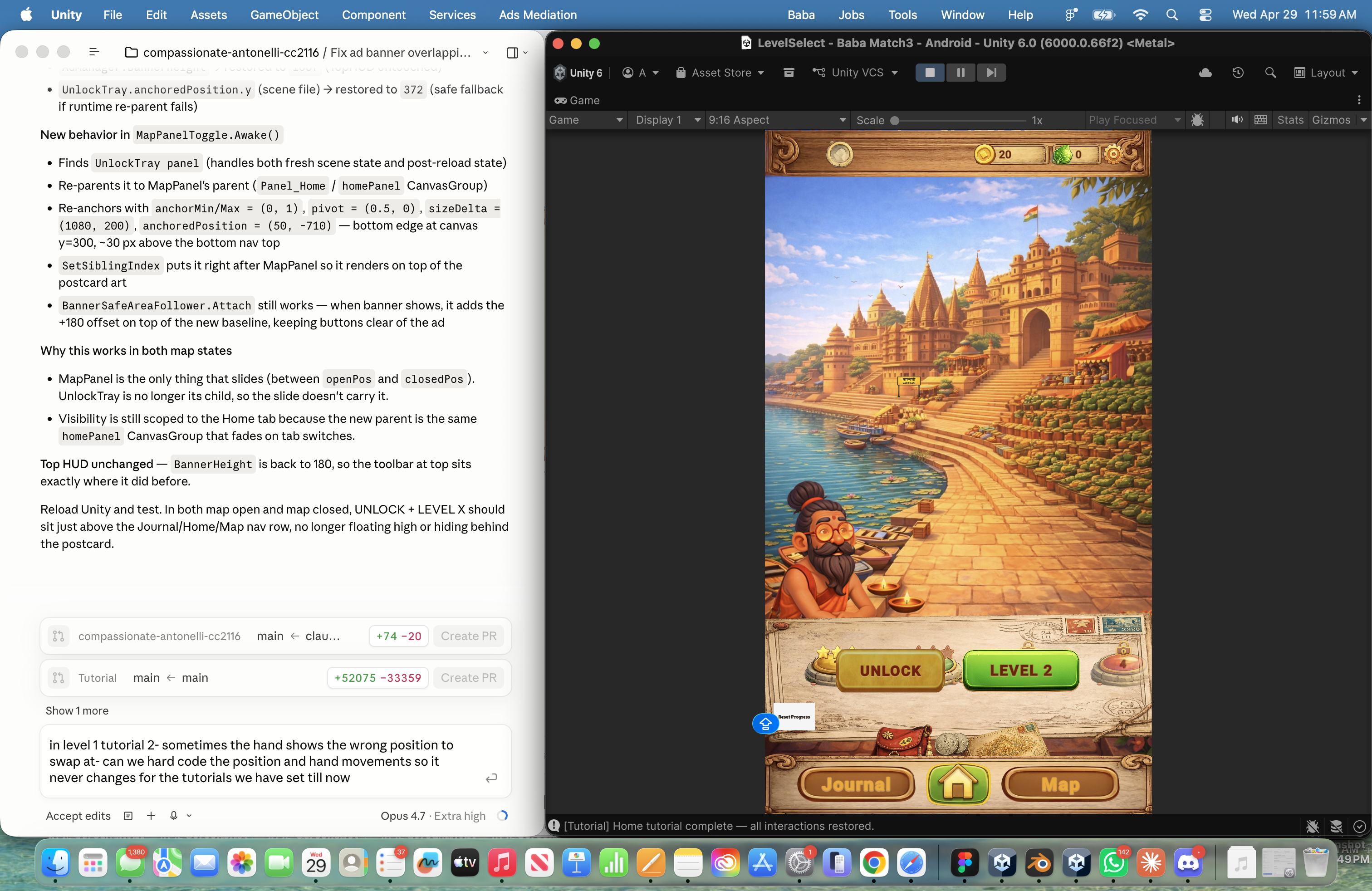
After designing match-3 games inside studios, I founded Purple Square Studios and built one end-to-end: design, code, art direction, cutscenes, analytics, ads, store ops, marketing site — everything. The team was me, Claude Code wired into Unity, and ChatGPT as a second opinion. Ninety hand-authored levels, three chapters across India, ~16k lines of C#, and a five-month paper trail of everything that broke — including the collaboration itself, which had to be debugged like any other system.
The Travel Match and Mili Match case studies in this portfolio were studio projects — I owned the experience design, other people owned the code, the build pipeline, the store account, the consequences. Baba On The Go was the other kind of bet: found a studio, pick the genre I know best, and find out what one designer can actually ship when the rest of the team is an AI pipeline.
The premise carried over from those earlier games: match-3 is genre-solved, theme is where the work is, and Indian players deserve a casual game with authentic cultural texture rather than a western game wearing an Indian skin. But this time the theme thesis had to survive contact with everything a studio normally absorbs for you — Unity build settings, keystore signing, GDPR consent flows, Play Console questionnaires, crash-log forensics, app-ads.txt.
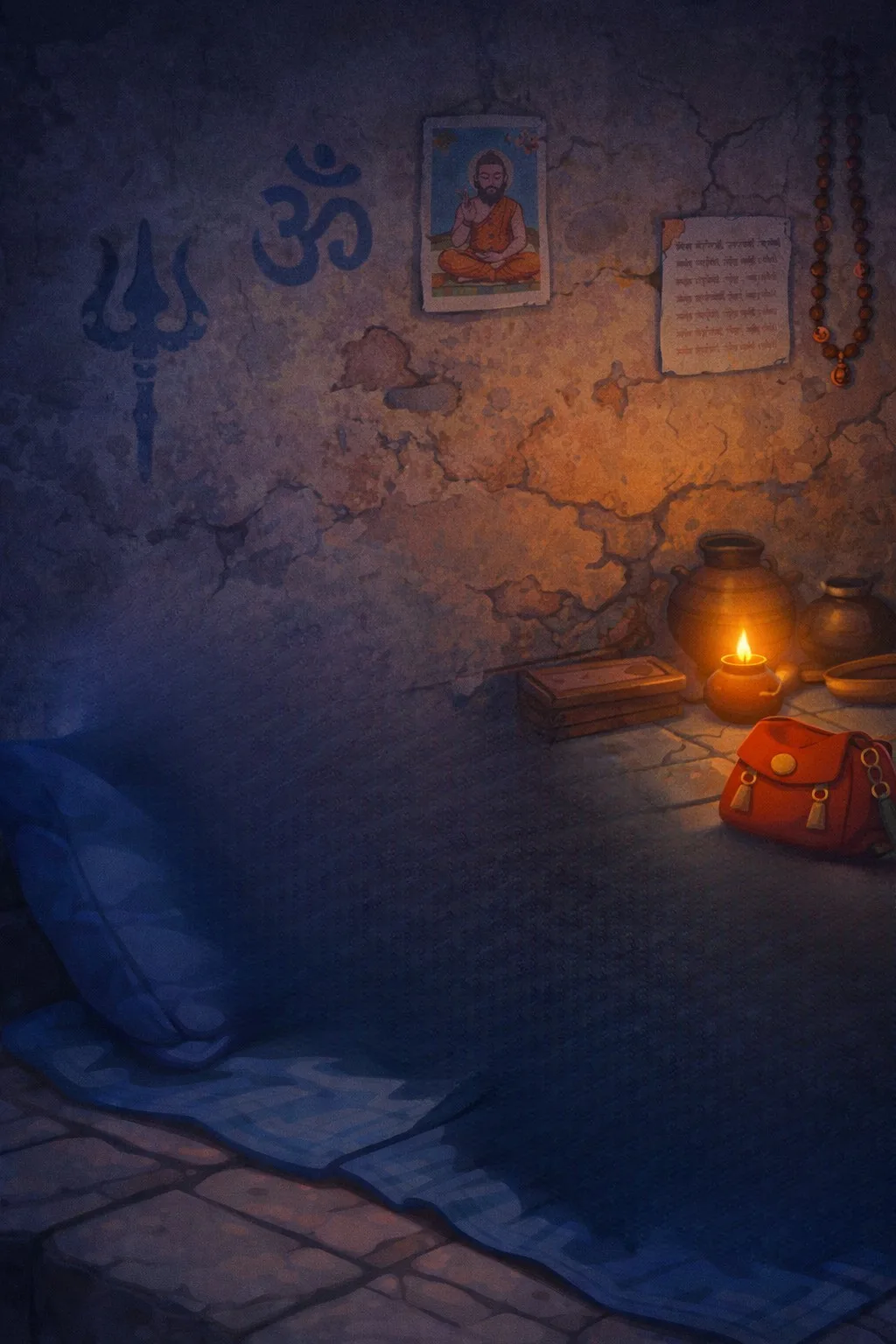
The game that came out the other side: Baba, a wise sadhu who has spent his whole life on the ghats of Varanasi, until one conversation with a young traveller over chai sends him onto the road. The player travels India with him — Varanasi → Jaipur → Shillong, with Rajasthan, Kerala and Ladakh on the roadmap — solving puzzles to earn herbs, restoring each city's scene piece by piece, unlocking chapter posters and motion-comic cutscenes as the journey unfolds. The collectible that drops out of the board is a laddu. The rescue tools are a gulel, a paper plane, a patang, a lattu. The theme goes all the way down.
Ninety hand-authored levels — no procedural filler — across three chapters, each a real Indian place with its own painterly backdrop, soundscape and story beats. Royal Match-class mechanics underneath: five blocker types (grass that spreads, crates, honey, layered ice, chains) governed by a formal damage-rules matrix, four board powerups plus combo pairs, a Lock & Key mechanic, void-cell board shapes, exit columns for the laddus.
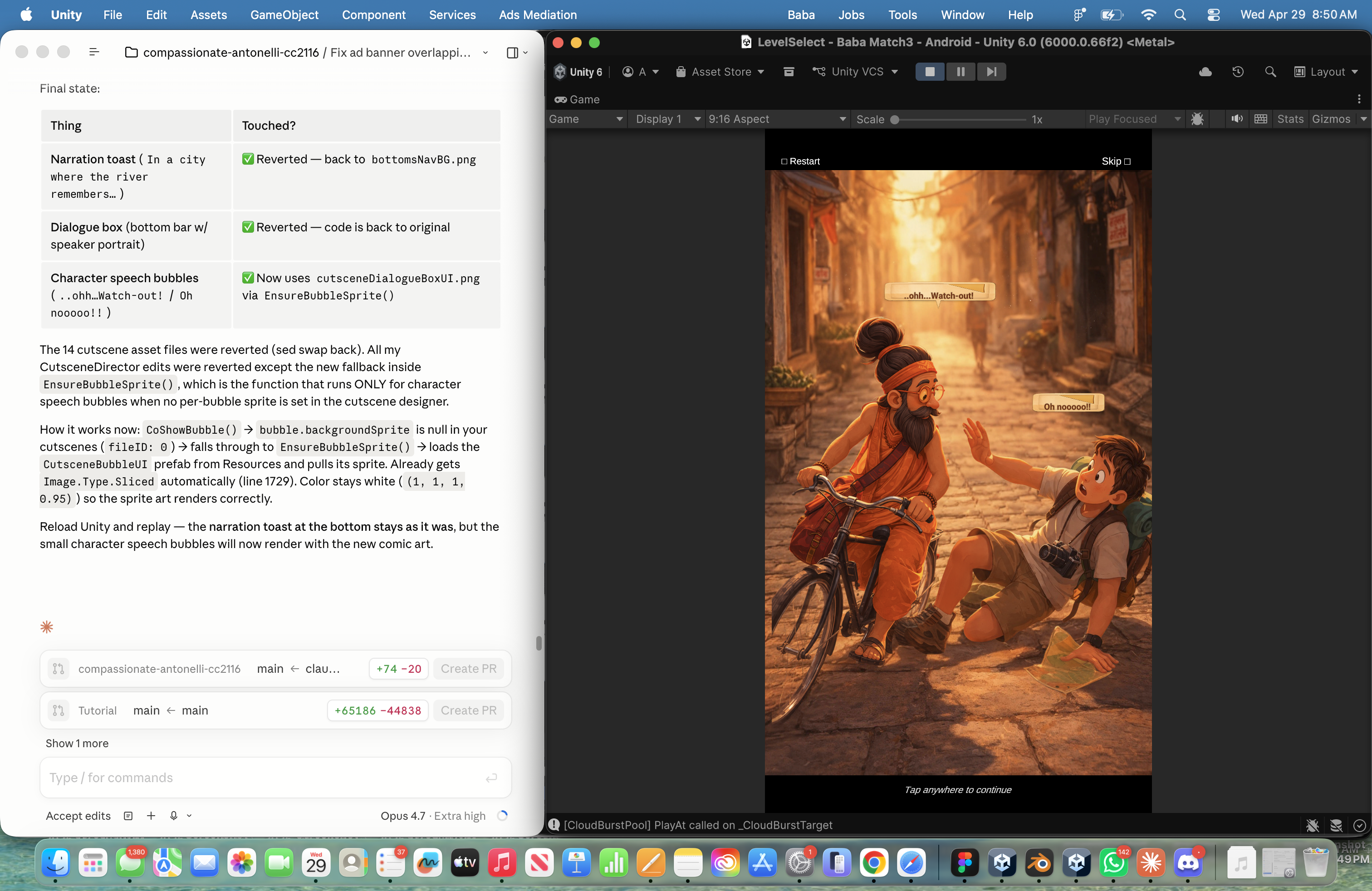
The development setup was genuinely AI-native, not AI-assisted. Claude Code ran with an MCP server wired directly into the Unity editor — ~65 generated tool-skills for editing assets, driving scenes, taking game-view screenshots, running tests. Parallel Claude worktrees worked separate features and merged back to main like teammates. The project's CLAUDE.md grew to 1,800 lines — architecture, damage matrices, PlayerPrefs references, coding conventions written as standing instructions to the AI.
level_attempt_summary — plus a stuck-score formula for detecting miserable levels, rage-quit detection, and a dashboard build order. Designed jointly by Claude and ChatGPT, then hooked across eight systems.Every project claims it was hard. This one kept receipts: a BUG_GRAVEYARD.md, seventeen numbered post-mortems in the project bible, and the full session history. A selection of the ones that taught the most:
buildGUID — which changes every build — so every update triggered PlayerPrefs.DeleteAll(). The fix was ten surgical lines. The honest part came after, when I asked if we could restore testers' progress: "No — and I want to be straight with you about this: the fix cannot restore already-lost progress."The most transferable thing this project produced isn't in the game. Working daily with an AI co-developer, the failure modes were real: it overwrote uncommitted work, deleted archived levels during a cleanup without asking, guessed at bug causes and shipped fixes that fixed nothing. My messages from those weeks are not polite. "Why does ChatGPT find errors better than you" was a low point. "Don't ever delete anything without asking me first" was another.
The turn came when I stopped treating those as bad days and started treating them as defects in a process I owned. Each blow-up got converted into written, persistent protocol — memory files the AI loads every session:
Then I asked for the protocol to be propagated to every project on my machine — and it has governed all of them since. Managing an AI turns out to be a design discipline like any other: observe the failure, name the pattern, encode the rule, verify the behavior changed. It's the same loop I'd use on a tutorial or an economy. The team member just happens to be a model.
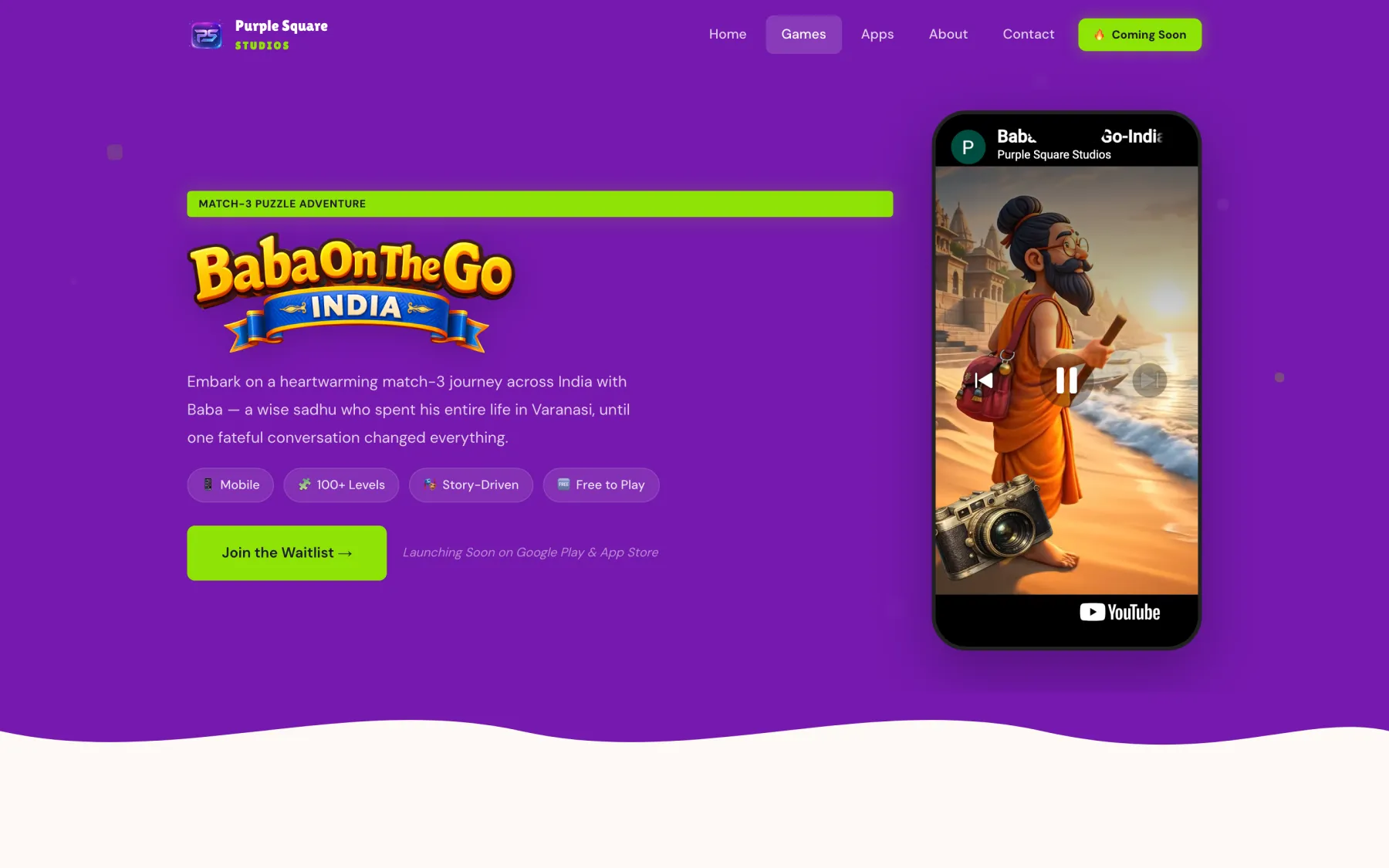
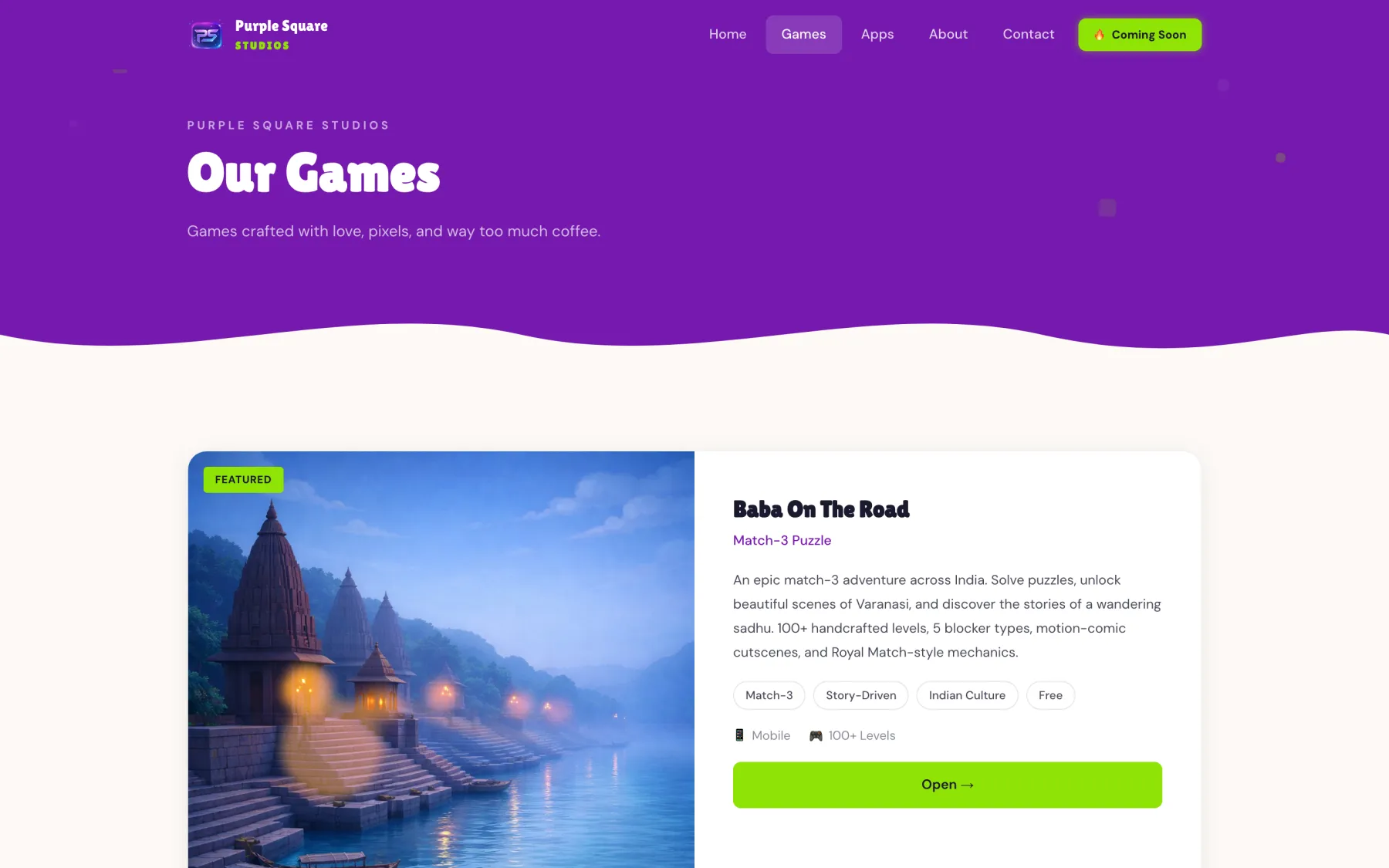
The marketing surface got the same AI-native treatment as the game. purplesquarestudios.com — designed and shipped as a static site on GitHub Pages — carries the studio positioning ("cozy, colorful games rooted in Indian culture… no grinding, no pay-to-win"), a full game page with story, feature pillars and a waitlist funnel, and the launch plumbing nobody sees: privacy policy, app-ads.txt, data-safety language matching the exact SDK stack.
The trailer was AI-generated video — multiple takes of Baba walking the Varanasi ghats, iterated over two evenings in April — cut with Suno's chapter themes and published to YouTube, embedded in a phone mockup on the game page. Cutscene narration and character lines came from ElevenLabs. The chapter-poster art direction lived in its own generated art bible.
Launch ops was its own education: release keystore created via Unity's bundled JDK when macOS had no Java; signed AABs; Play App Signing; the discovery that a post-2023 personal Play account must run a closed test with 12+ testers for 14 continuous days before production unlocks. And one near-disaster caught mid-upload — renaming the game to "Baba On The Go India" silently changed the Unity package name, which would have broken Firebase and collided with Play's locked ID. "Stop — revert the package name. This is the exact ripple effect I flagged." Product name changed; package ID pinned; crisis averted.
When real testers came back saying levels felt tight, the rebalance was one scripted pass over all 90 level files: original move budgets +25%, curve preserved — followed by an 18-question tester survey (device, stuck levels, unfair-moves check, NPS, cutscene skip rates) to catch what analytics can't.
As of July 2026, Baba On The Go: India is in closed testing on Google Play (running down its 14-day tester clock at v1.7) and on TestFlight for iOS, with the full shipping stack live — LevelPlay ads, Firebase analytics, GDPR consent, signed release pipeline, studio site, waitlist. Everything a studio ships, shipped by one person directing an AI pipeline.
The earlier match-3 case studies argued that theme deserves the rigour of the core loop. This project extends the claim: so does the process. The highest-leverage artefacts here weren't screens or systems — they were the written protocols that turned an erratic AI collaborator into a reliable one, the documentation that let every hard-won fix stay fixed, and the habit of treating each failure (a bug, a build, a blow-up at the AI) as raw material for a rule. That's the studio I actually founded: not the games — the operating system that makes them shippable.